
Blog / Frederick Ford Dealer

The 2026 Ford Explorer vs the Toyota Highlander: Key Differences

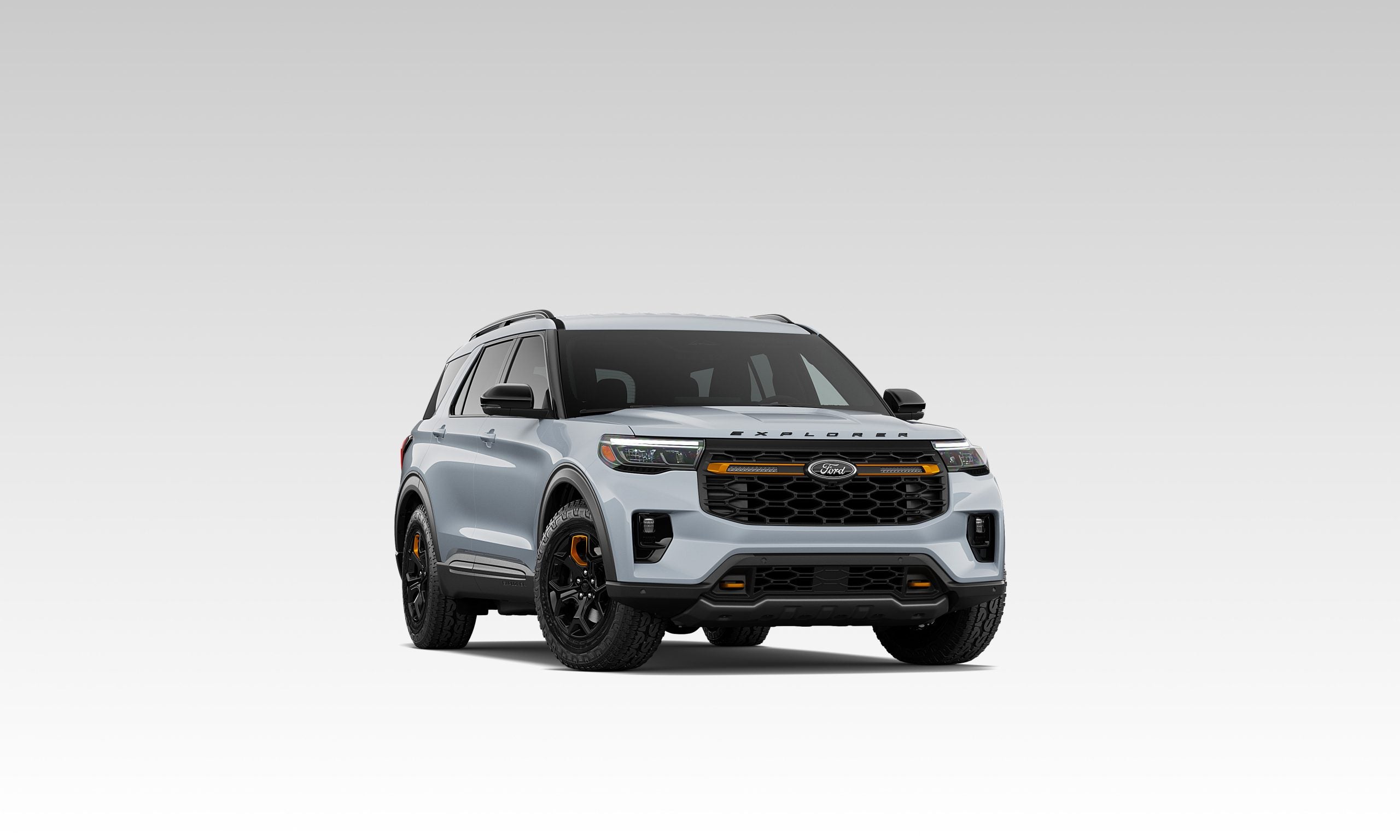
2026 Ford Explorer in a silver white color

Three-row SUVs are an essential part of life for large families and those who need more from their vehicles than simple daily commutes. In that arena, two popular choices are the 2026 Ford Explorer and the Toyota Highlander. Both are respected models that offer impressive features all-around, but when you take a closer look, there’s one that stands taller. The 2026 Explorer is a great choice for families, adventurers, and tech-minded drivers.

Stronger Performance & Power

One big factor in the Ford Explorer vs. Toyota Highlander comparison is power. The 2026 Ford Explorer comes standard with a 2.3-liter EcoBoost engine that delivers:

  • 300 horsepower
  • 310 lb-ft of torque
  • Strong acceleration
  • Confident passing (even when fully loaded)

If that’s still not enough for you, you can upgrade to a 3.0-liter twin-turbo EcoBoost V6 engine that maximizes output, which gives the Explorer a “sporty” feel on the road.

While Toyota’s Highlander has impressive capabilities, it can’t quite achieve such horsepower heights; its 2.4-liter four-cylinder engine gives drivers only about 265 horsepower and it isn’t quite as responsive under heavy loads or at high speeds.

Spacious Interior & Flexible Cargo

The 2026 Ford Explorer interior is designed for family life and outdoor adventures alike. With a comfortable three-row cabin, it offers:

  • Spacious seating in each row
  • Plenty of cargo space behind the back row
  • Folding rear seats to further increase carrying capacity
  • An easy loading design for large items

While the Highlander also offers three rows, space is tighter and the flexibility isn’t quite there. The 2026 Ford Explorer interior simply offers more when it comes to hauling and maximizing comfort.

Advanced Technology & Comfort Features

SUV shoppers have always cared about space and towing, but there’s a new consideration for car manufacturers to make: tech features. This is where the gap widens. While other companies have stalled in this area, Ford has taken the reins with adding tech features to already impressive models.

The 2026 Ford Explorer features:

  • A large touchscreen interface for ease of use and reading
  • An available digital instrument cluster
  • Optional premium audio systems
  • Hands-free driving options with BlueCruise

These features combine to make for a vehicle that tech-minded drivers can’t pass up. While the Toyota Highlander offers plenty of its own tech features, it focuses more on comfort than cutting-edge tech offerings.

In the Ford Explorer vs. Toyota Highlander comparison, the Explorer is the better choice when it comes to available systems and driver-first innovations.

Capability for Towing & Adventure

Three-row SUVs may be family-ready, but not all of them are prepared for true adventure. The 2026 Ford Explorer breaks the mold by catering to both. With a towing capacity of up to 5,000 pounds, you’ll be able to bring along all the equipment you need. Add in intelligent 4-wheel drive system options and driving modes for various weather and terrain, and you’re sitting behind the wheel of an SUV that can do it all.

Again, the Highlander can stand on its own merit… just not quite as tall. The towing options are there, but a weaker engine means it will be working harder to achieve feats the 2026 Explorer accomplishes with ease.

Safety & Driver Assistance

Safety is a top priority for Ford and Toyota alike, and your peace of mind will be intact behind the wheel of either brand’s models. But everyone has their preferences, even when it comes to safety. For your consideration, the 2026 Ford Explorer offers these top-of-the-line safety features:

  • Blind spot monitoring
  • Lane-keeping assistance
  • Adaptive cruise control
  • Automatic emergency braking
  • Rear cross-traffic alert functionality

Toyota’s Safety Sense does offer similar features, but Ford has a habit of making more advanced systems available across more trim levels. This means their customers gain access to a robust safety toolkit that isn’t available elsewhere.

Ford Explorer vs. Toyota Highlander: The Choice is Clear

When comparing these two lauded options, the 2026 Ford Explorer goes the extra mile by offering:

  • More powerful engine options
  • Better towing capability
  • More flexible options for interior configurations
  • More advanced driver-assist safety tech
  • An overall more engaging experience for the driver

In short, the 2026 Explorer is a better, safer experience for those who want their day-to-day and weekend adventures to be more rewarding. This three-row SUV can handle family schedules, long road trips, towing demands, and all kinds of exploring—and it’s available at The Frederick Motor Company.

Still on the fence? That’s okay! Stop by and give it a test drive to experience it for yourself. You won’t be disappointed!
Posted in:

Related Posts

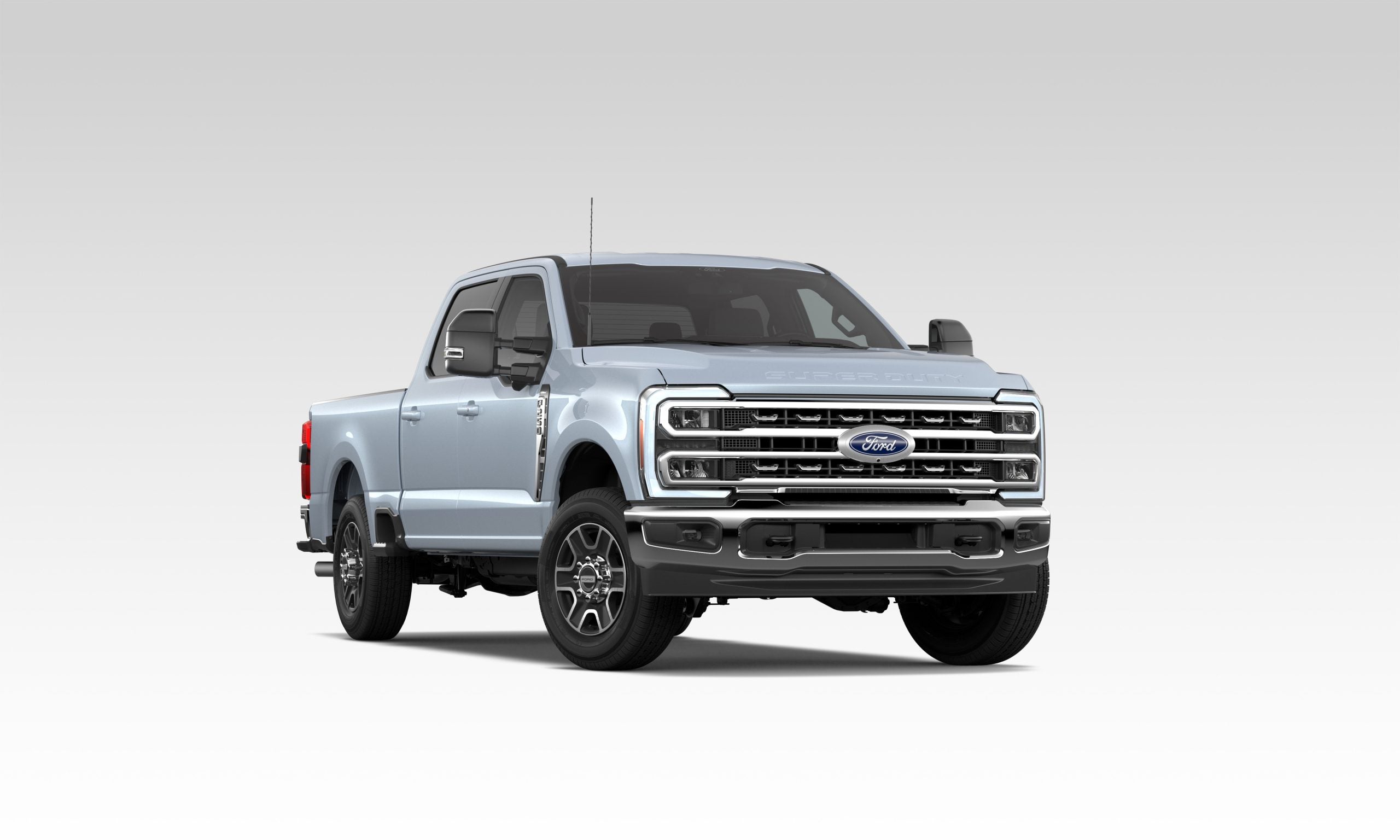
A 2026 F-250, Ford Lariat in Glacier Gray Metallic Tri-coat

What Is a Ford F-250 Super Duty? A Guide to the Super Duty Lineup

Superman. Super-duper. Supercalifragilisticexpialidocious. Super is one of those words that’s quintessentially American, and Ford Motor Company puts it to proper use in the nomenclature of possibly the quintessential American vehicle: the pickup truck, specifically across its Super Duty lineup. If you've been shopping trucks, you've probably seen the names F-150, F-250, and Super Duty used almost interchangeably, and it's easy to walk away without a clear sense of what separates them: In plain-English, a Ford F-250 Super Duty is Ford's three-quarter-ton, heavy-duty pickup truck, the entry point in the Super Duty Lineup, which sits just above the light-duty F-150 range. More About the Ford F-250 A Ford F-250 is a 2500-class truck, built to tow and haul more than a half-ton truck like the F-150. Where the F-150 is engineered as a do-it-all daily driver, the F-250 is engineered first for capability: heavier frame, stronger axles, and engines sized for serious tow-weight. The "250" comes from Ford's F-Series naming convention, which signals payload class rather than trim or horsepower. The F-150 is Ford's half-ton (1500-class) truck. The F-250 is the three-quarter-ton (2500-class) step up. The F-350 continues into one-ton (3500-class) territory. The numbers climb with capability, not just size. What Super Duty Means Super Duty isn't a single model. It's Ford's name for the heavy-duty truck family that starts where the F-150 stops: F-250, F-350, F-450, F-550, and F-600. Every one of these trucks shares the same basic mission, towing and payload beyond what a half-ton can manage and scales up in capacity as the numbers climb. The Ford F-250 Super Duty is where the Super Duty family begins, and it's the volume leader for buyers who need more than a half-ton without stepping up to the dual rear wheels or higher GVWR of an F-350 or F-450. F-150 vs F-250: Key Differences This is where the F-150 vs F-250 matchup gets serious traction. A few areas separate the two trucks well beyond the badge on the tailgate. Frame and suspension: The F-150 rides on a fully boxed steel frame with independent front suspension, tuned for a comfortable daily ride. The Ford F-250 Super Duty uses a solid front axle on 4x4 models and a heavier frame built to carry more weight without flexing. Towing and payload: F-150 towing tops out around 13,500 lbs. F-250 towing starts above that and climbs past 22,000 lbs with the diesel engine and the right hitch setup. Payload follows the same pattern: The F-150 tops out near 2,440 lbs, while the F-250 can carry more than 4,200 lbs. Engine options: F-150 buyers choose from V6, V8, and hybrid powertrains built for a blend of power and efficiency. F-250 buyers choose from larger-displacement gas V8s and the Power Stroke diesel, sized for pulling heavy loads rather than saving fuel. Ride quality and daily drivability: The F-150's independent front suspension and lighter weight make it noticeably smoother unladen. The F-250's stiffer suspension stays composed under a heavy trailer, at some cost to ride comfort when it's empty. Bed and cab configurations: Both trucks offer Regular Cab, SuperCab, and Crew Cab options, but bed lengths differ. The F-150 offers 5.5, 6.5, and 8-foot beds. The F-250 offers 6.75 and 8-foot beds. Price: The F-150/F-250 price gap is real, and it shows up before you add a single option. F-250 pricing starts higher and reflects its heavier-duty components. Super Duty Engine Options Every engine in the Super Duty lineup is built around a single mission: move heavy weight without strain. 6.8L V8 (standard gas): The base engine on the F-250, well suited to daily driving, moderate towing, and buyers who don't need maximum capability. 7.3L V8, nicknamed "Godzilla" (available gas): The largest-displacement gas engine in a modern pickup, built for buyers who want big power and strong payload numbers without diesel maintenance and cost. Power Stroke turbo diesel: Available in standard- and high-output iterations, the 6.7L Power Stroke delivers the torque that makes the F-250's highest towing ratings possible. This is the engine pick for frequent, heavy towing. Who Needs an F-250? A Ford F-250 Super Duty makes sense when the job calls for it: Frequent or heavy towing, especially loads that push past what an F-150 is rated for. Fifth-wheel and gooseneck trailers, which need the F-250's frame and hitch capacity. Hauling heavy payloads regularly, not just occasionally tossing gear in the truck bed. Commercial and work-truck use, where uptime and duty cycle matter more than fuel economy. Plenty of drivers are well served by an F-150. If your towing is occasional, your loads are moderate, and daily comfort matters more than maximum lugging capacity, the F-150 will do the job for less money to buy, insure, and fuel. An F-250 is the right truck for a specific kind of workload, but it’s not a truck everyone needs. Finding or Ordering a Super Duty at The Frederick Motor Co If you're browsing trucks for sale in Frederick, MD and a Super Duty is on your list, know going in that many F-250 configurations are built to order rather than sitting on a lot. Diesel engines, specific bed and cab combinations, and work-ready upfits often mean placing a factory order instead of picking one off the row. And that's exactly what our team handles every day. Whether you need a specific Ford F-250 Super Duty configuration, a work-truck build, or Ford Pro commercial support for a fleet, we can walk you through ordering, financing, and timelines. If you're comparing trucks for sale in Frederick, MD and want to see what's on the lot today, browse our Super Duty F-250 inventory or check out the F-150 lineup if a half-ton fits your needs better. Ready to talk specifics? Contact us and we'll help you find the right truck, whether that's off our lot or built to your spec.

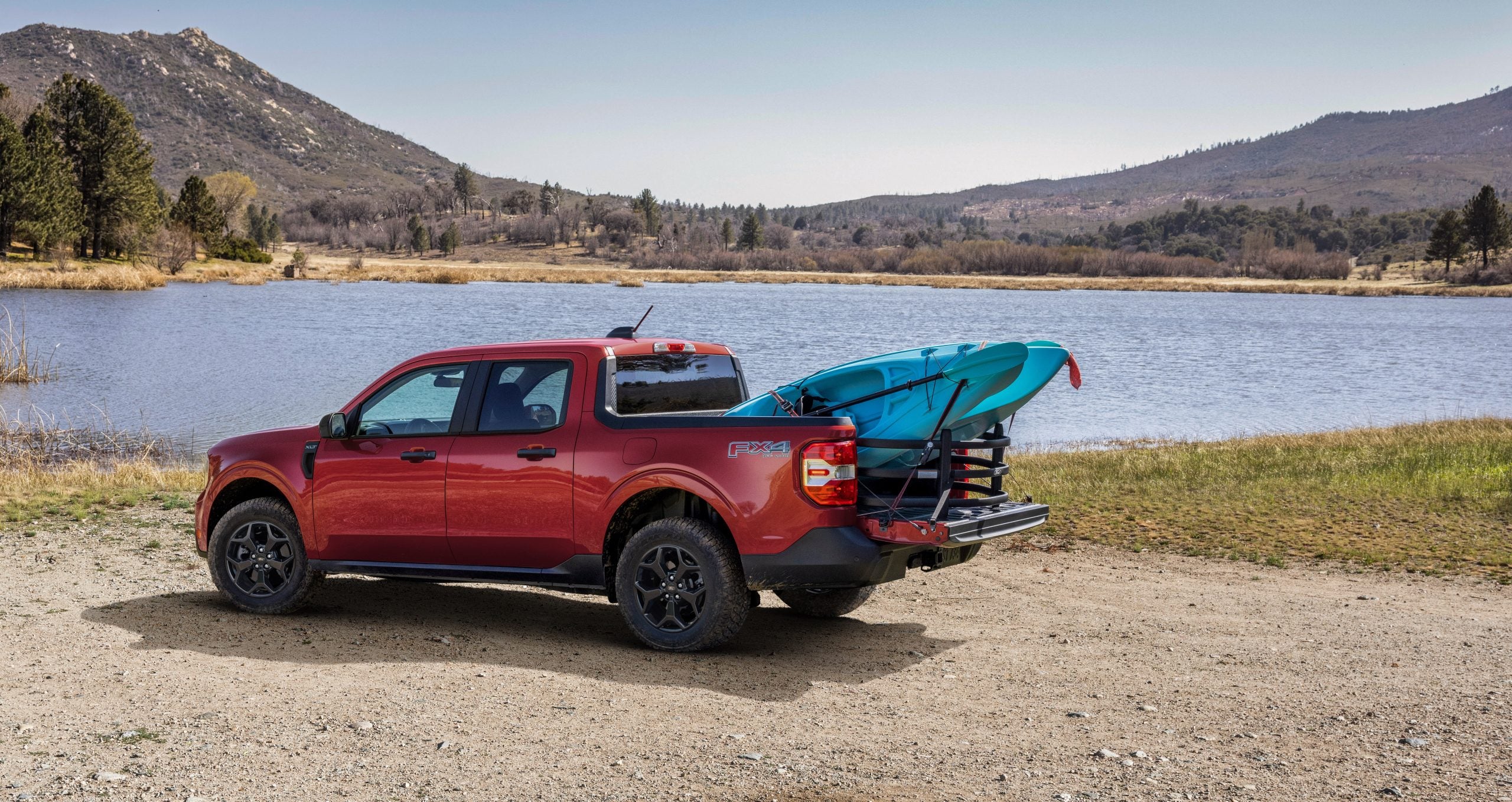
A red 2025 Ford Maverick parked along a lake shore

Should I Buy a New or Used Car? What the Numbers Show

The Obvious Answer Isn't Always the Right One If you’ve been asking yourself “should I buy a new or used car,” you’ve probably already landed on the same answer most shoppers do: Used cars are cheaper, so used must be smarter. Right!? It’s true for some buyers, honestly. If you’re shopping for high-mileage vehicles, older model years, or paying cash to keep costs at an absolute minimum, a used car almost always makes financial sense. This deep dive, though, is for the shopper who’s still on the fence while considering something in the four-to-eight-year-old range and planning to finance it. That’s where the math gets tricky, and where most buyers make a decision based on sticker price without running the full numbers. The Case for Buying Used: Let's Give It a Fair Hearing When people wonder “should I buy a new or used car,” used vehicles get serious consideration for good reason. Before we dig into where the math gets complicated, it’s worth being transparent about the advantages a used vehicle carries: Lower sticker price on day one. You’re starting with a smaller number, which feels like an immediate win. Slower depreciation curve. New vehicles take their steepest value drop in the first two years, so buying used means someone else absorbed that hit. Potentially lower insurance premiums. This depends on the vehicle’s value. These are make-or-break benefits for many buyers. The question isn’t whether used cars have advantages, but whether those advantages hold up once you factor in how you’re paying for the vehicle. Where the Used Car Math Gets Complicated Here’s where the new vs. used car comparison shifts. For buyers shopping in the four-to-eight-year-old range and financing the purchase, several factors make opting for new much more enticing. Interest Rates Used car loans typically carry a significantly higher APR than new car financing, and the gap widens even further when you factor in manufacturer incentives. A lower sticker price on a used vehicle can potentially result in more total interest paid over the life of the loan. Side-by-Side: The Numbers Most Buyers Never Run 60-month comparison: This is a hypothetical example, and may not reflect any one vehicle we offer. A $5,000 difference in sticker price can shrink to less than $1,000 in true total cost. And that’s before accounting for the factors below. Warranty & Repairs A five-year-old vehicle is approaching or already past the factory warranty window. That means, from day one of ownership, any repair costs come out of your pocket. One unexpected powertrain issue can wipe out months of savings. Unknown Vehicle History Even with a report in hand, wear patterns, previous ownership habits, and deferred maintenance are harder to quantify on a used vehicle. You can estimate, but you can’t know for sure. New Car Advantages Most Buyers Overlook The new vs. used car debate tends to focus entirely on price, which means buyers routinely undervalue the tangible benefits that aren’t on a sticker: Full factory warranty coverage: Ford’s 3-year/36,000-mile bumper-to-bumper and 5-year/60,000-mile powertrain warranty means zero surprise repair costs in the early years of ownership. Latest safety technology and driver assist features: Older model years simply don’t have what current vehicles offer, from blind spot monitoring to updated lane assist as well as meaningful fuel efficiency improvements. Higher trade-in value down the road: A well-maintained new vehicle retains more predictable equity than a used one with accumulated mileage. Reassurance that has a dollar value: There’s no pre-purchase inspection anxiety, and no wondering what the previous owner may or may not have maintained. "The real question isn't new or used. It's what’s the total cost over the life of the loan? Most buyers never ask." Ford Incentives: Where New Gets Even More Competitive This is where the new vs. used car comparison can shift most dramatically, especially at a Ford dealership like The Frederick Motor Co. Ford regularly offers manufacturer APR incentives that can go as low as 0% to 2.9% on select models. These are only available on new vehicles. For any buyer still asking “should I buy a new or used car,” these Ford incentives often change the total cost comparison entirely. Ford incentive programs can include: Low APR financing offers available only on new vehicles Cash back offers that can further reduce the effective purchase price, sometimes bringing a new Ford within a few thousand dollars of a comparable used model Loyalty incentives for returning customers or shoppers switching from another brand Ford incentives rotate monthly and are model-specific. Buyers shopping today may find offers on the F-150, Escape, Explorer, or Maverick that make the numbers even more favorable than the general example above. Our team can walk any buyer through a side-by-side payment comparison on the spot. So: New or Used? If you’re still weighing “should I buy a new or used car,” here’s where most buyers land once they finish their research: If you’re buying high-mileage, paying cash, and keeping costs at an absolute minimum, going used likely makes sense. If you’re buying something four to eight years old and financing it, run the full numbers before assuming used is cheaper. With today’s used car interest rates and available incentives on new models, the gap is often smaller than it looks like at a glance. If you haven’t asked what the total cost is over the life of the loan, ask it before you sign anything; it’s the most important number in the deal, and most buyers never see it. Whether you land on new or pre-owned, The Frederick Motor Co. has inventory on both sides of that decision and a team that’s happy to help you run the comparison. See What Ford Incentives Are Available This Month Ford’s current APR and cash back offers change monthly, and right now there may be incentives on vehicles like the F-150, Explorer, Escape, or Maverick that make buying new more competitive than you’d expect. The Frederick Motor Co. team can build out a payment comparison for any buyer comparing new and used. No appointment needed! Stop by our dealership at One Waverley Drive in Frederick, MD, give us a call at 301-663-6111, or browse current inventory and incentives. Whether you’re leaning new or used, we’ll help you see the full picture before you decide. Have more questions? We’re happy to answer them!

26_FRD_EPR_400030_st_vpbl

What Is a Ford EcoBoost Engine? A Guide to Ford's Turbo Engine Tech

The world of engines has always had its own language. Naturally aspirated. Turbocharged. Supercharged. Flat 6. V8. V12. Sometimes you may feel you need a translator. That’s what we’re here to do today, specifically for a popular engine from Ford: the EcoBoost engine. A Ford EcoBoost engine is a gas engine built to match a bigger engine's power while burning less fuel, using turbocharging, direct fuel injection, and variable valve timing together. If you've searched what is EcoBoost and want the short version, that's it. For the full version, read on. What is an EcoBoost Engine? Break the name in half and you've got the general idea. "Eco" points to efficiency: a smaller displacement burning less fuel at idle and cruising speed. "Boost" points to turbocharging: forcing extra air into the cylinders so a small engine performs above its size class. Stripped of marketing, this motor is a small, turbocharged gasoline engine built to match a bigger engine's output without the bigger engine's thirst. It isn't a hybrid; there’s no battery and no electric motor, just a better-engineered gas engine. Want electrified power instead? Ford's PowerBoost hybrid lineup answers a similar question, and deserves its own post. Ford’s Innovation: Three Technologies Working Together Three technologies carry the load under the hood of an EcoBoost vehicle, none exotic on their own. Ford's innovation was stacking the three together: Turbocharging: Like a leaf blower for the engine, forcing extra air into the cylinders for more power without adding cylinders Direct injection: Sprays fuel straight into each cylinder at high pressure instead of the intake stream, for less waste and cleaner combustion Variable valve timing: Valves open and close based on how hard you're driving, the way a runner adjusts their stride to match the needed pace Put simply, the Ford EcoBoost engine is a smaller engine that does a bigger engine's job by forcing in more air and using it in a more precise manner. The EcoBoost Lineup: Which Engine Goes in Which Ford Ford builds the EcoBoost in six displacements, each tuned for a different job: High-output versions like the F-150 Raptor and Expedition Tremor sit at the top of each range. Check your window sticker for the exact trim. The 2.7L and 3.5L both live under the F-150's hood, splitting the difference between fuel economy and towing muscle. The 2.3L is the standard in the Bronco and Mustang, delivering four-cylinder efficiency with real performance credibility. Curious which one's parked on our lot? Browse our new Ford inventory to see EcoBoost trims in person. Real-World Fuel Economy: What to Expect When it comes to EcoBoost gas mileage, the EPA numbers are real, but built around gentle, steady-state driving. Your daily commute isn't a lab, so remember the following: Steady highway cruising gets you closest to the sticker numbers, since the turbo isn't working hard. Stop-and-go traffic, aggressive throttle, and towing “spool” the turbo more, widening the efficiency gap. A heavy foot erases the savings fast: EcoBoost is efficient because it leans on a small displacement, but drive it like a V8 and it'll drink like one. If EcoBoost gas mileage is your deciding factor, drive smooth and let the turbo work steadily. Is EcoBoost Reliable? Here's the real record on Ford EcoBoost engine durability. Early 3.5L timing chains and cam phasers: Pre-2017 trucks are most associated with a cold-start rattle from worn phasers and stretched chains. Ford revised the design for later generations, though it hasn't fully vanished. Intercooler condensation: Humid conditions can condense moisture inside the intercooler, causing a stumble or misfire under boost, most notably on the 3.5L. Ford's fix adds a sensor and software that clears the water automatically. Premium fuel: Every EcoBoost runs fine on regular 87-octane gas. Ford recommends premium, usually 91-octane (93 for the Mustang), for peak output. Light knock running on regular is normal and is not damaging. Shopping used? Ask if the timing chain or phasers were serviced. Buying new? These issues are largely resolved. Either way, keep the oil change interval and let the turbo idle down after hard driving. Is an EcoBoost Right for You? Now that you know what an EcoBoost engine is and how it drives, matching it to your life is simple. Mostly commuting with occasional towing? A Ford EcoBoost engine is a strong fit, giving V6 or V8-adjacent power without a V8's fuel bill. Towing constantly, or chasing maximum fuel economy above all else? Cross-shop Ford's PowerBoost hybrid, a different answer to the same question. EcoBoost gets there with turbocharging; PowerBoost adds a battery and electric motor. We'll cover that comparison in a future post. Not sure which engine or trim fits your budget? Check our used Ford inventory for EcoBoost models that might already be within reach. Frequently Asked Questions Is the 2.7 EcoBoost a good engine? Yes. It's one of the most well-regarded engines in the F-150 lineup, balancing strong torque with better fuel economy than the V8. Is the 3.5 EcoBoost reliable? In newer model years, yes. Early trucks (pre-2017) are tied to timing chain and cam phaser wear, so ask about service history on a used one. Does EcoBoost require premium fuel? No. Every EcoBoost runs on regular 87-octane gas. Premium is recommended for best performance, though isn’t required for safety. Is EcoBoost a hybrid? No, which answers the question what is EcoBoost at its core: a turbocharged gasoline engine, full stop, no battery or electric motor. Ford's separate PowerBoost lineup is the hybrid option. Find Your EcoBoost at The Frederick Motor Company A blog post only gets you so far. The best way to get the feel of a Ford EcoBoost engine is behind the wheel. Contact our team to schedule a test drive and feel the difference between a spec sheet and the driver’s seat.