
The world of engines has always had its own language. Naturally aspirated. Turbocharged. Supercharged. Flat 6. V8. V12. Sometimes you may feel you need a translator. That’s what we’re here to do today, specifically for a popular engine from Ford: the EcoBoost engine. A Ford EcoBoost engine is a gas engine built to match a bigger engine's power while burning less fuel, using turbocharging, direct fuel injection, and variable valve timing together. If you've searched what is EcoBoost and want the short version, that's it. For the full version, read on.
What is an EcoBoost Engine?
Break the name in half and you've got the general idea. "Eco" points to efficiency: a smaller displacement burning less fuel at idle and cruising speed. "Boost" points to turbocharging: forcing extra air into the cylinders so a small engine performs above its size class.
Stripped of marketing, this motor is a small, turbocharged gasoline engine built to match a bigger engine's output without the bigger engine's thirst. It isn't a hybrid; there’s no battery and no electric motor, just a better-engineered gas engine. Want electrified power instead? Ford's PowerBoost hybrid lineup answers a similar question, and deserves its own post.
Ford’s Innovation: Three Technologies Working Together
Three technologies carry the load under the hood of an EcoBoost vehicle, none exotic on their own. Ford's innovation was stacking the three together:
- Turbocharging: Like a leaf blower for the engine, forcing extra air into the cylinders for more power without adding cylinders
- Direct injection: Sprays fuel straight into each cylinder at high pressure instead of the intake stream, for less waste and cleaner combustion
- Variable valve timing: Valves open and close based on how hard you're driving, the way a runner adjusts their stride to match the needed pace
Put simply, the Ford EcoBoost engine is a smaller engine that does a bigger engine's job by forcing in more air and using it in a more precise manner.
The EcoBoost Lineup: Which Engine Goes in Which Ford
Ford builds the EcoBoost in six displacements, each tuned for a different job:
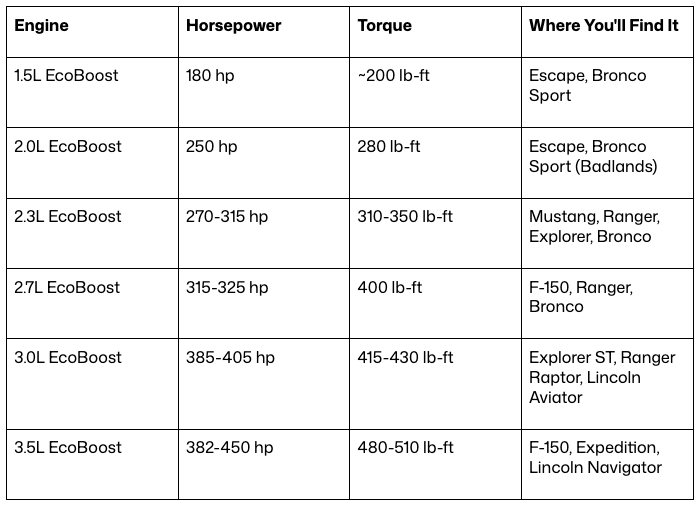
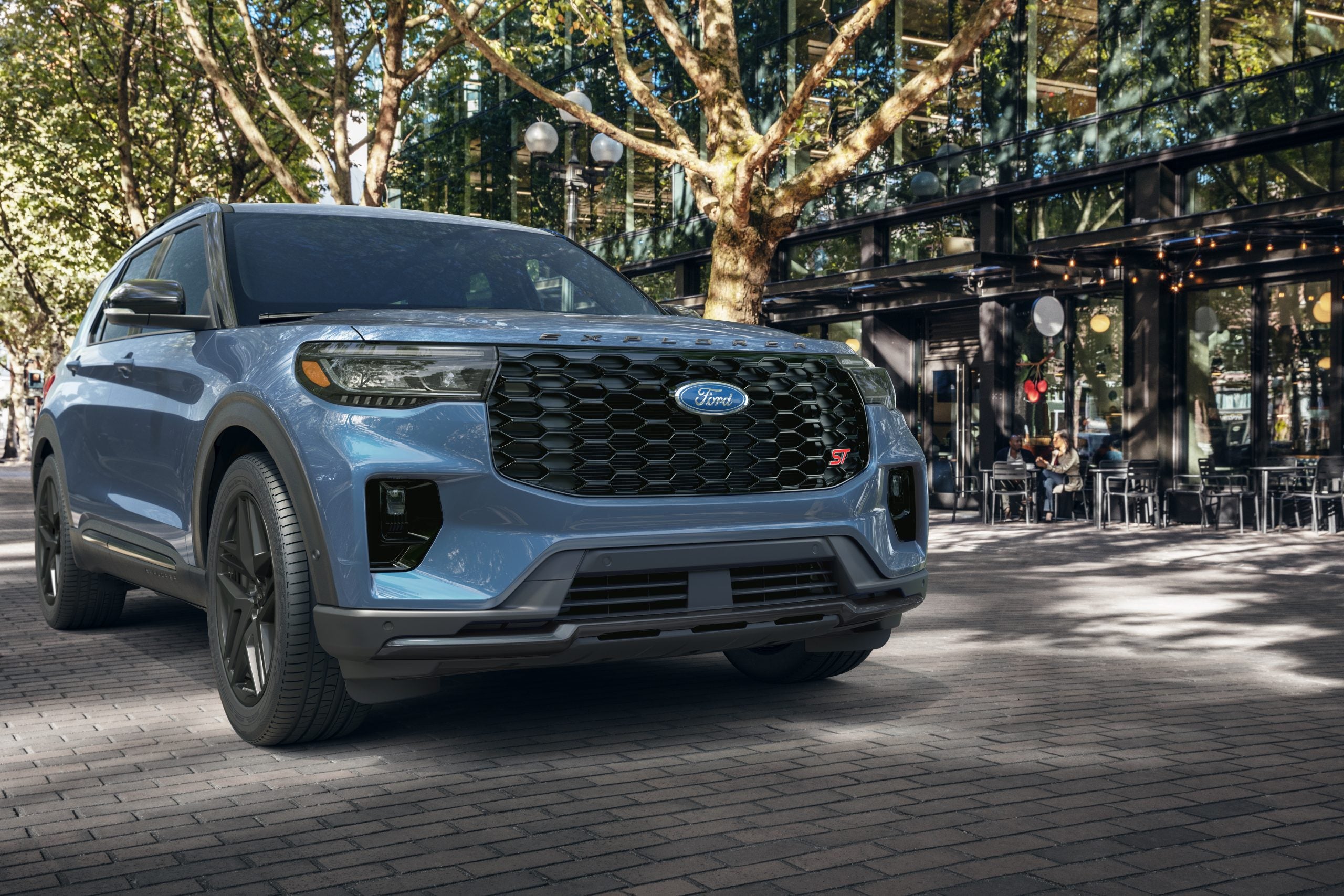
High-output versions like the F-150 Raptor and Expedition Tremor sit at the top of each range. Check your window sticker for the exact trim.
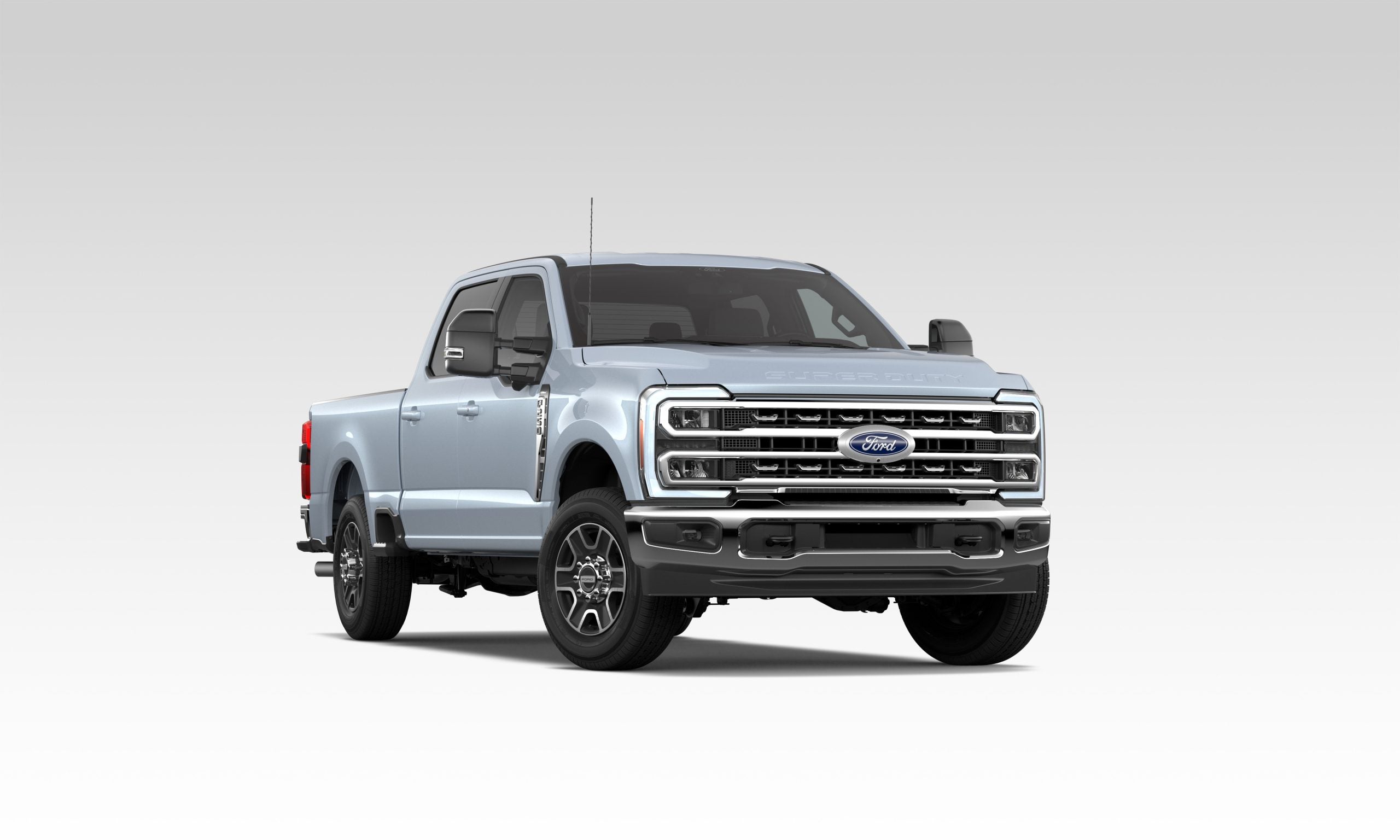
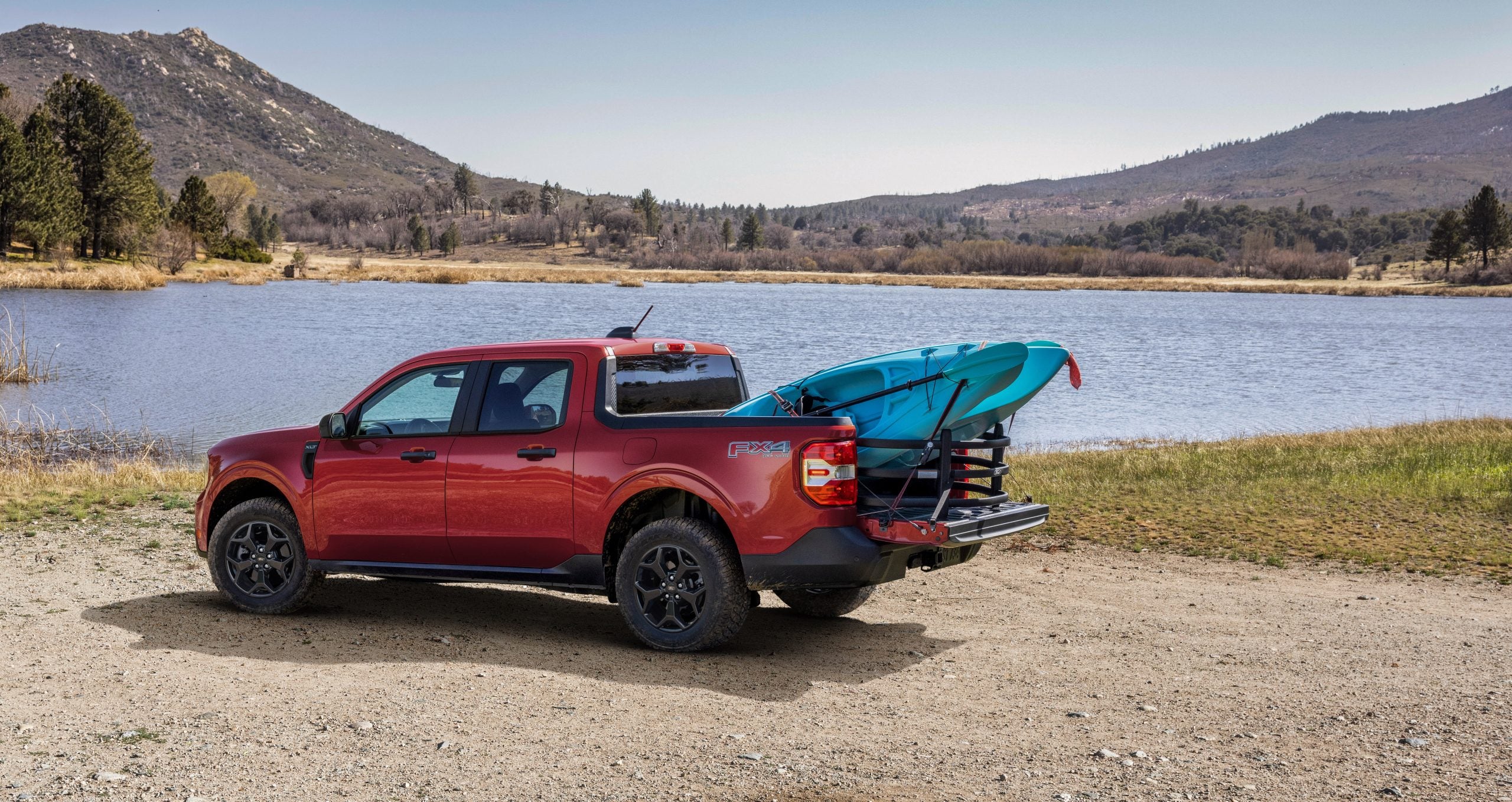
The 2.7L and 3.5L both live under the F-150's hood, splitting the difference between fuel economy and towing muscle. The 2.3L is the standard in the Bronco and Mustang, delivering four-cylinder efficiency with real performance credibility.
Curious which one's parked on our lot? Browse our new Ford inventory to see EcoBoost trims in person.
Real-World Fuel Economy: What to Expect
When it comes to EcoBoost gas mileage, the EPA numbers are real, but built around gentle, steady-state driving. Your daily commute isn't a lab, so remember the following:
- Steady highway cruising gets you closest to the sticker numbers, since the turbo isn't working hard.
- Stop-and-go traffic, aggressive throttle, and towing “spool” the turbo more, widening the efficiency gap.
- A heavy foot erases the savings fast: EcoBoost is efficient because it leans on a small displacement, but drive it like a V8 and it'll drink like one.
If EcoBoost gas mileage is your deciding factor, drive smooth and let the turbo work steadily.
Is EcoBoost Reliable?
Here's the real record on Ford EcoBoost engine durability.
- Early 3.5L timing chains and cam phasers: Pre-2017 trucks are most associated with a cold-start rattle from worn phasers and stretched chains. Ford revised the design for later generations, though it hasn't fully vanished.
- Intercooler condensation: Humid conditions can condense moisture inside the intercooler, causing a stumble or misfire under boost, most notably on the 3.5L. Ford's fix adds a sensor and software that clears the water automatically.
- Premium fuel: Every EcoBoost runs fine on regular 87-octane gas. Ford recommends premium, usually 91-octane (93 for the Mustang), for peak output. Light knock running on regular is normal and is not damaging.
Shopping used? Ask if the timing chain or phasers were serviced. Buying new? These issues are largely resolved. Either way, keep the oil change interval and let the turbo idle down after hard driving.
Is an EcoBoost Right for You?
Now that you know what an EcoBoost engine is and how it drives, matching it to your life is simple. Mostly commuting with occasional towing? A Ford EcoBoost engine is a strong fit, giving V6 or V8-adjacent power without a V8's fuel bill.
Towing constantly, or chasing maximum fuel economy above all else? Cross-shop Ford's PowerBoost hybrid, a different answer to the same question. EcoBoost gets there with turbocharging; PowerBoost adds a battery and electric motor. We'll cover that comparison in a future post.
Not sure which engine or trim fits your budget? Check our used Ford inventory for EcoBoost models that might already be within reach.
Frequently Asked Questions
Is the 2.7 EcoBoost a good engine? Yes. It's one of the most well-regarded engines in the F-150 lineup, balancing strong torque with better fuel economy than the V8.
Is the 3.5 EcoBoost reliable? In newer model years, yes. Early trucks (pre-2017) are tied to timing chain and cam phaser wear, so ask about service history on a used one.
Does EcoBoost require premium fuel? No. Every EcoBoost runs on regular 87-octane gas. Premium is recommended for best performance, though isn’t required for safety.
Is EcoBoost a hybrid? No, which answers the question what is EcoBoost at its core: a turbocharged gasoline engine, full stop, no battery or electric motor. Ford's separate PowerBoost lineup is the hybrid option.
Find Your EcoBoost at The Frederick Motor Company
A blog post only gets you so far. The best way to get the feel of a Ford EcoBoost engine is behind the wheel. Contact our team to schedule a test drive and feel the difference between a spec sheet and the driver’s seat.